1. Introduction
1.1 Purpose
This Procedures aims to ensure the safety, efficiency, and quality control of the heat treatment process of ASTM A333 / A333M-24 Gr.6 SEAMLESS PIPES, providing standardized operational guidance to minimize human errors, ensure product consistency and reliability, and comply with relevant safety and environmental regulations. Its main objectives include:
· Ensure safety: Prevent potential accidents by establishing clear operating procedures to effectively protect the personal safety of employees.
· Quality assurance: The heat treatment process is carried out according to standardized process parameters, aiming to optimize material performance indicators and meet product quality requirements.
· Improve efficiency: Continuously optimize the design of heat treatment process to shorten the production cycle, reduce resource consumption, and achieve the purpose of cost control.
· Promote training: As one of the important reference materials for new employees to learn, it helps them quickly familiarize themselves with and master the correct operation skills and methods.
1.2 Scope
Materials: Gr.6
Referred Spec and Standards:
ASTM A333/A333M-24 Standard Specification for Seamless and Welded Steel Pipe for Low-Temperature Service and Other Applications with Required Notch Toughness
1.3 Training and retraining
This regulation is one of the basic materials for the training of new employees. All new employees must receive comprehensive training and pass the examination before they can work. Regular retraining of existing employees should be carried out to ensure that they master the latest safety standards and technical requirements.
1.4 Handling of special cases
In the event of a situation not explicitly specified in the regulations, the relevant personnel must immediately report to the person in charge of the relevant department and suspend the operation until they receive clear instructions.
1.5 Effective date, revision and update
This regulation shall come into force from the date of promulgation. All relevant personnel must strictly abide by the provisions of this regulation.
This procedure will be reviewed and updated regularly according to the actual situation to maintain its validity and applicability. Any revision will be issued in the form of a formal document and indicate the revision date and version number.
2. Organizational structure and responsibilities
2.1 Management responsibilities
Workshop director:
1). Responsible for the safety, quality, cost control and production efficiency of the whole workshop.
2). Formulate and implement annual production plans and targets.
3). Supervise all technical improvement projects to improve product quality and production efficiency.
4). Coordinate cross-departmental communication to ensure reasonable allocation of resources.
Production supervisor/supervisor:
1). Arrange daily production activities according to order requirements.
2). Monitor the operation status of the production line and solve emergencies in time.
3). Organize and implement staff training plan to improve the technical level of the team.
4). Regularly check the maintenance of equipment to ensure good operating condition.
Heat treatment process engineer:
1). Provide technical support for operators, including but not limited to parameter setting guidance.
2). Collect and analyze production data, continuously optimize the process, analyze the causes of nonconforming products, and propose improvement measures.
3). Report quality status and improvement suggestions to superiors.
4). Assist in the development of new products.
Mechanical engineer:
1). Responsible for the design, installation and commissioning of medium frequency induction heating system and related auxiliary facilities.
2). Develop a preventive maintenance plan to reduce downtime.
3). Provide emergency troubleshooting services.
4). Pay attention to the latest technology development trends and timely recommend equipment upgrade solutions.
2.2 Operator responsibilities
Safety and health:
1). Strictly abide by the safety rules and regulations of the company and workshop, wear appropriate personal protective equipment (such as safety helmets, goggles, labor protection shoes, earplugs, masks, heat-resistant gloves, etc.).
2). Attend safety production training regularly to understand emergency response measures.
3). Report potential safety risks in time and take necessary measures to avoid accidents.
Equipment operation and maintenance:
1). Be familiar with the operation manual and technical parameters of the equipment, and start, run and shut down the equipment according to the prescribed procedures.
2). Carry out daily equipment inspection, including cleaning, lubrication and other basic maintenance work to ensure that the equipment is in good condition.
3). Participate in regular equipment overhaul or professional maintenance activities, and cooperate with maintenance personnel to complete tasks.
Process execution:
1). Set all parameters accurately according to the process requirements, such as heating temperature, time, etc.
2). Monitor all indicators in the whole heating process to ensure that the product quality meets the standards.
3). Record detailed production logs, including but not limited to incoming material information, processing conditions, abnormal conditions, etc.
Quality control:
1). Conduct preliminary inspection of the finished products, eliminate unqualified products, and report the problems to the superior or quality inspection department.
2). Follow the requirements of the quality management system and participate in continuous improvement activities to improve product quality.
Team collaboration and communication:
1). Maintain good communication with other team members, solve problems together and optimize production process.
2). Listen to and execute instructions from superiors, and be able to report problems encountered in the work and their solutions to superiors.
Environmental control:
1). Pay attention to saving energy and materials, reduce waste.
2). Maintain a good working environment and classify and dispose of waste as required.
Self-improvement and development:
1). Actively learn new technologies and knowledge, and constantly improve their own business capabilities.
2). Participate in various training courses organized by the enterprise to continuously improve professional quality and personal skills.
3. Equipment management
3.1 Equipment working capacity
*Note: The information of equipment is only for heat-treatment furnace inφ273 Workshop.
Quenching/Normalizing furnace- Used for austenitizing | |
Type | Stepping(52 steps) |
Fuel | natural gas |
Max.temp. | 1150℃ |
Discharge temp. | 850℃-1050℃ |
Temp.deviation | ±10℃ |
Steel pipe diameter range | Φ114.3mm ~Φ406.4mm |
Inside width | 14300mm |
Inside length | 12860mm |
Tempering furnace- Used for stress relive | |
Type | Stepping(82 steps) |
Fuel | natural gas |
Max.temp. | 850℃ |
Discharge temp. | 550℃-750℃ |
Temp.deviation | ±10℃ |
Steel pipe diameter range | Φ114.3mm ~Φ340mm |
Inside width | 14300mm |
Inside length | 19760mm |
4. Material management
4.1 Storage conditions
1) Carbon steel, carbon manganese steel and low alloy steel should be stored separately in the designated area as far as possible.
2) The storage area of the steel pipe to be processed and the steel pipe that has been processed should avoid high temperature environment, humid environment and easy collision environment.
4.2 Quality inspection
Quality inspection of the sample tube before heat treatment is an important step to ensure the quality of the final product. This not only helps prevent potential problems, but also improves production efficiency and cost effectiveness.
Visual inspection: visually inspect the surface of the sample tube for cracks, scratches, dents or other defects. These defects may affect the final heat treatment.
Dimension measurement: Use a meter, caliper, micrometer, gauge, ultrasonic thickness gauge and other tools to measure the diameter, wall thickness and other dimensions of the sample tube at both ends and in the middle to ensure that they meet the design requirements.
Cleanliness check: Ensure that the sample tube surface is clean, without grease, dirt or residue, because these impurities may affect the temperature distribution in the heat treatment process, and then affect the treatment effect.
Material verification: Confirm the material and steel grade of the sample tube through the furnace batch number. Different materials may require different heat treatment processes.
Identification and traceability: Ensure that each sample tube has a clear identification to facilitate the tracking of its production history and processing process, which is very important for the traceability of quality problems.
After the above inspection is completed, if all the indicators meet the requirements, heat treatment can be carried out. If there are any unqualified items, the specific unqualified items should be reported to the workshop office, and the sample tube should be returned to the previous process to ensure that only qualified sample tubes enter the heat treatment stage.
5. Heat treatment operation procedures
5.1 Requirements for on-the-job operation of heat treatment
5.1.1 Operators must be trained and able to operate independently and safely.
5.1.2 Operators must master the basic knowledge of heat treatment of common steel.
5.1.3 Operators must be familiar with the model, applicable specifications, general structure, performance and maintenance knowledge of heat treatment equipment.
5.1.4 The operator must have the ability to deal with general faults and sudden faults independently, understand the heat treatment process of the main products, and ensure that the equipment operates normally according to the process requirements.
5.2 Flow and traceability requirements of steel pipes
5.2.1 On-duty personnel must be familiar with the main product production and processing procedures of their workshop. Before heat treatment, they must verify that the information matches the actual items and check if there are any obvious defects in the steel pipes. Defective products with defects are strictly prohibited from entering the heat treatment process. After heat treatment, the information must be re-verified to ensure accuracy before completing the circulation of this batch of steel pipes in the heat treatment area. It is strictly forbidden for defective products to flow into subsequent processes.
5.2.2 For the steel pipe required to be tracked by the upper process, the marking must be done until the whole tracking process is completed. For the workpiece required to be traced by the subsequent process, the traceability of the production documents during the heat treatment of the steel pipe must be ensured.
5.2.4 For the steel pipe that fails to pass the heat treatment, it must be marked and placed in a designated area for subsequent treatment.
5.3 Operation requirements
5.3.1 Before heat treatment of steel pipe, the working condition of equipment and power cabinet must be checked to confirm that normal production can be carried out before starting heat treatment preparation.
5.3.2 Before heat treatment of steel pipe, appearance, size and defect inspection and information confirmation must be carried out, and production can be carried out only after the confirmation is correct.
5.3.3 Complete the batch information of the steel pipe itself, the actual temperature of the heat treatment process, the completion time and the frequency of feeding and other production records. 5.3.4 The heat treatment process must be strictly implemented and the heat treatment system must be observed.
5.3.5 Operations must be carried out in strict accordance with the operating procedures for each type of equipment.
5.4 Safety protection
3.4.1 Production shall not be carried out beyond the capacity of the equipment. The maximum heating temperature is 1050℃, and the use of excessive temperature is strictly prohibited.
3.4.2 Operators should pay attention to fire prevention, explosion prevention, poison prevention, scald prevention, electric shock prevention, and understand relevant first aid knowledge and be able to use fire-fighting equipment.
3.4.3 When working, you must wear protective masks, work clothes, gloves, protective shoes and other necessary protective equipment.
3.4.4 Non-heat treatment staff shall not adjust or use heat treatment equipment, instruments and meters without consent.
3.4.5 It is strictly prohibited to put explosive and inflammable materials into the steel pipe and enter the electric furnace together, otherwise it may lead to explosion and cause serious industrial disasters.
7. Heat treatment process
7.1 Normalizing
Normalizing: heat the steel component to Ac3 + 30 ~ 50℃, kept for a period of time and then cooled in air.
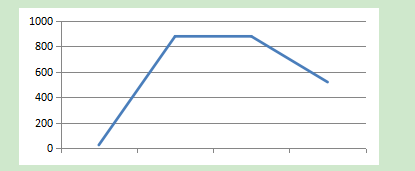
Figure 1. Normalizing process curve
Table 1. Common hot treatment processes for normalizing
Steel grade | Process temperature/℃ | cooling-down method |
Gr.6 | 880-940 | Air cooling |